8 Best European Zoom Alternatives in 2026
The best European alternative to Zoom in 2026 is Whereby, based in Norway. All 8 options below are European-owned, GDPR-native and ranked by feature parity and relevance.
By the EU Alternatives team Last updated
Our top pick this year is Whereby, but every option on this list is European-owned, GDPR-native, and production-ready. Worth a closer look: Pexip, Digital Samba, TeamViewer, OpenTalk.
Zoom alternatives are mainly Video Conferencing and Project Management & Productivity. Browse any of those categories for a wider shortlist beyond this list.
Top European Zoom alternatives compared
| # | Alternative | Country | Open source | Free tier | Compare |
|---|---|---|---|---|---|
| 1 | Whereby | Norway | No | Yes | vs Zoom → |
| 2 | Pexip | Norway | No | No | vs Zoom → |
| 3 | Digital Samba | Spain | No | Yes | vs Zoom → |
| 4 | TeamViewer | Germany | No | No | vs Zoom → |
| 5 | OpenTalk | Germany | No | No | — |
-
Integrate customizable WebRTC video calls into your website or app using a flexible API and SDK. Ideal for Telehealth and Digital Mental Health.
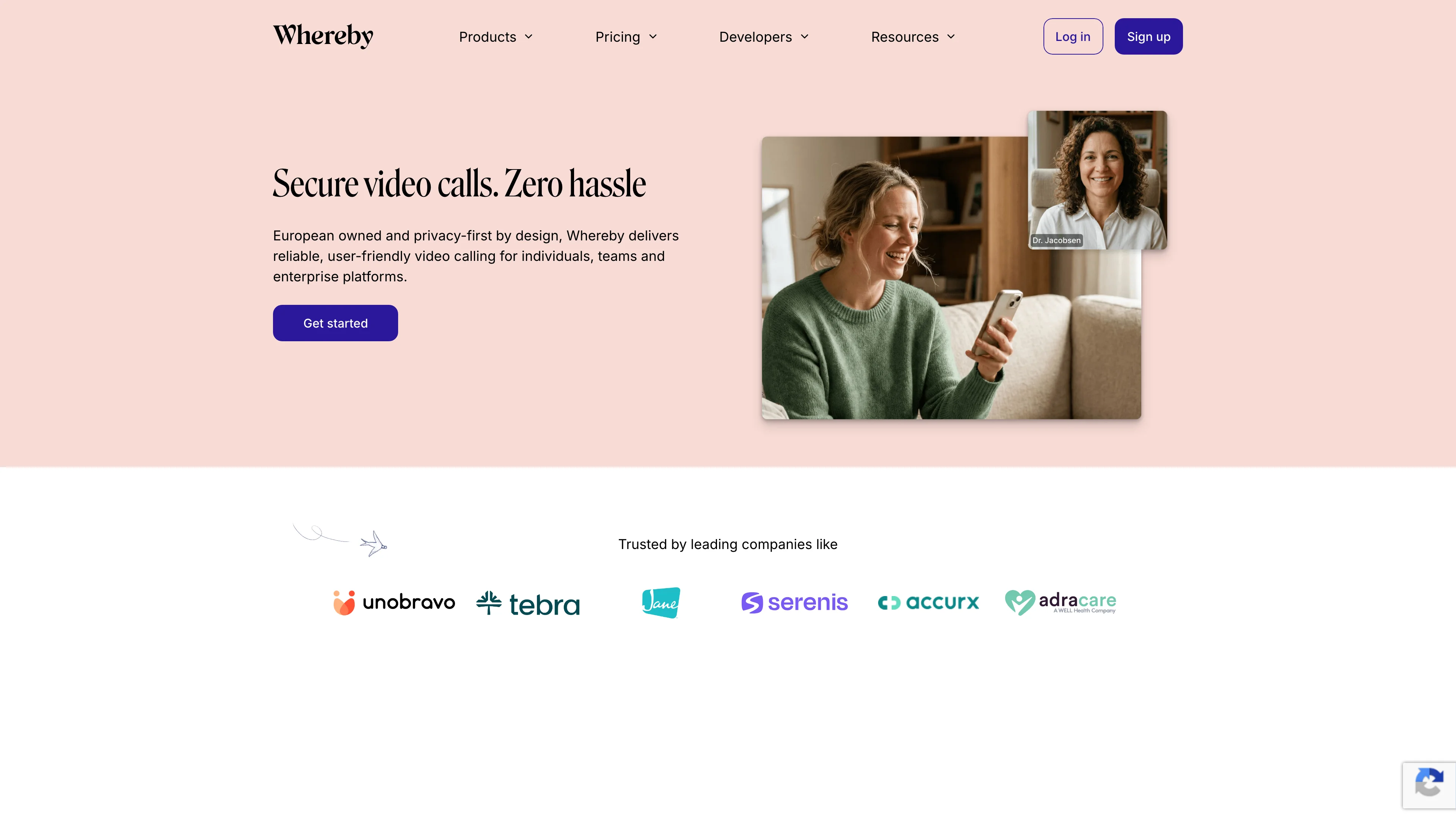
Whereby is a Norwegian browser-based video conferencing platform that requires no download, no install, and no account for meeting guests. Rooms are permanent, so you share your link once and it works every time. That makes it the simplest way to run video calls for customer-facing teams, telehealth providers, and SaaS products that need embedded video.
The Embedded product provides an SDK and API for integrating video directly into your own application, with custom branding, programmatic room creation, and controls over layout, chat, and recording. Breakout rooms, virtual whiteboards, file sharing, and AI-powered transcription handle the full meeting workflow without additional tools.
Key benefits:
- No download required since guests join via a browser link with no account or install
- Permanent room links that work every time without scheduling ahead
- Embeddable SDK for integrating video into any web or mobile product
- Custom branding with your logo, colours, and domain in the room interface
- Breakout rooms for splitting large sessions into focused smaller groups
- Recording and AI transcription with automated meeting summaries
- HIPAA and ISO 27001 certified for healthcare and regulated use cases
Whereby is headquartered in Oslo, Norway, an EEA member state with full GDPR applicability. The platform holds ISO 27001 and HIPAA certifications and stores data on European infrastructure. As a Norwegian-owned company, Whereby is not subject to U.S. cloud jurisdiction, FISA, or the CLOUD Act.
Used by telehealth providers, online tutors, customer support teams, and SaaS builders who need reliable, no-friction video experiences embedded in their own products.
-
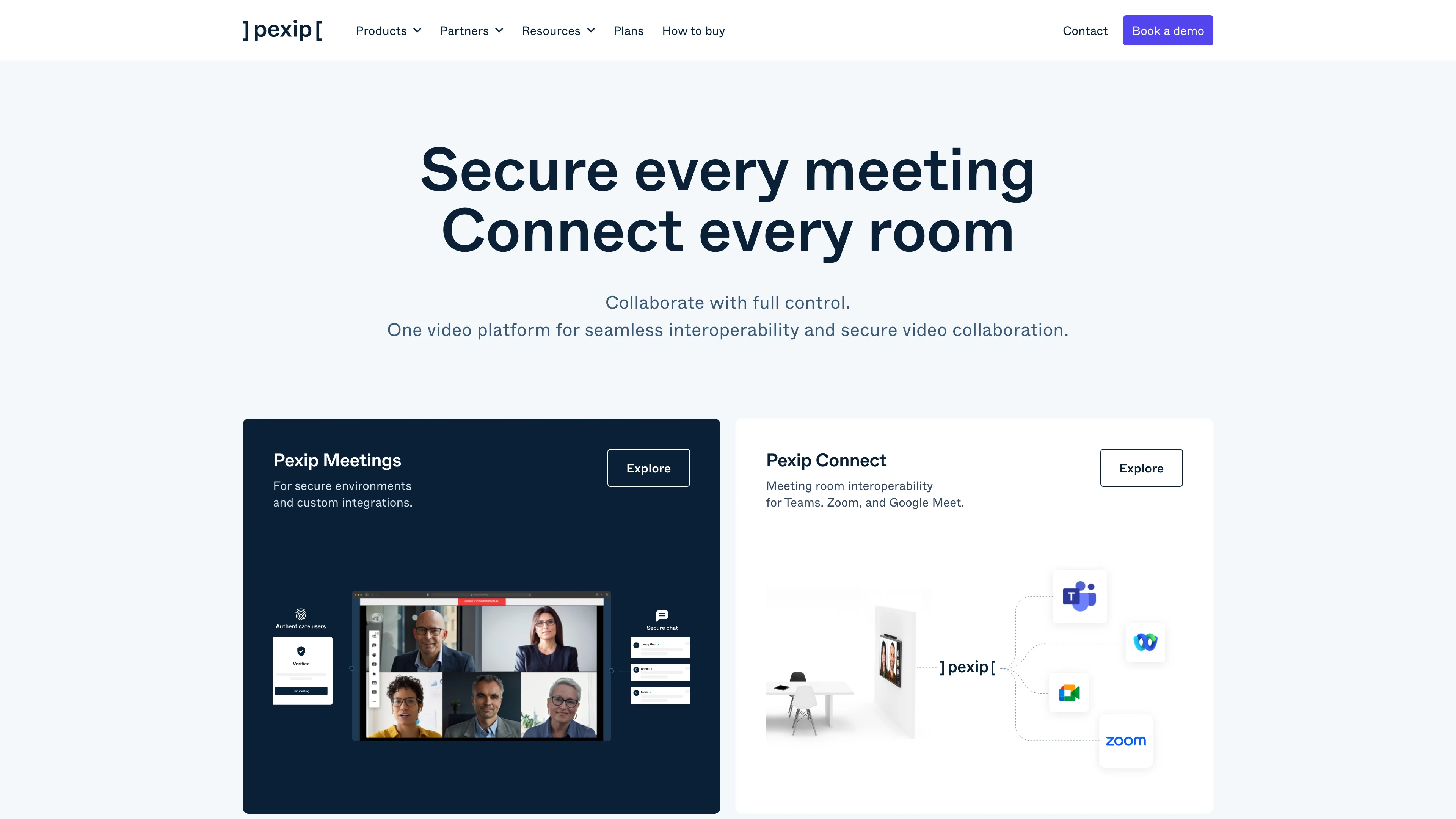
Pexip delivers secure video collaboration with full deployment control, letting organizations run meetings on their own infrastructure or in any cloud. The platform powers interoperable video across Microsoft Teams, Zoom, Google Meet, and Cisco, making it the reference choice for governments and defense agencies that cannot accept standard SaaS video tools.
Pexip's engine can be deployed self-hosted, in private cloud, or as managed service, with add-ons for private AI transcription, meeting-room scheduling, one-touch join, and appointment booking via Pexip Engage. The Connect product bridges legacy and modern room systems with Teams and Zoom, and Secure Meetings ships dedicated environments with custom integrations for classified or regulated workloads.
Key benefits:
- Self-hosted deployment with full control over data, keys, and network topology
- Teams and Zoom interoperability so existing room hardware keeps working
- Private AI for transcription and summarization without data leaving the estate
- Air-gapped and classified operation supported for defense and government
- Global partner ecosystem including Microsoft, Google, HP, Logitech, and NVIDIA
Pexip AS is headquartered in Oslo, Norway, with engineering across Europe. The platform meets GDPR requirements, holds ISO 27001 certification, and is FedRAMP-authorized for US federal use, giving European customers sovereign deployment options under EU and Norwegian jurisdiction while maintaining the highest public-sector assurance levels.
Trusted by NATO, the U.S. Department of Veterans Affairs, the U.S. Air Force, the U.S. Department of the Treasury, and the German Bundesagentur für Arbeit.
-
Barcelona video conferencing with end-to-end encryption, GDPR-native infrastructure, and a Zoom-style free tier, plus Digital Samba Embedded, a white-label SDK for developers.
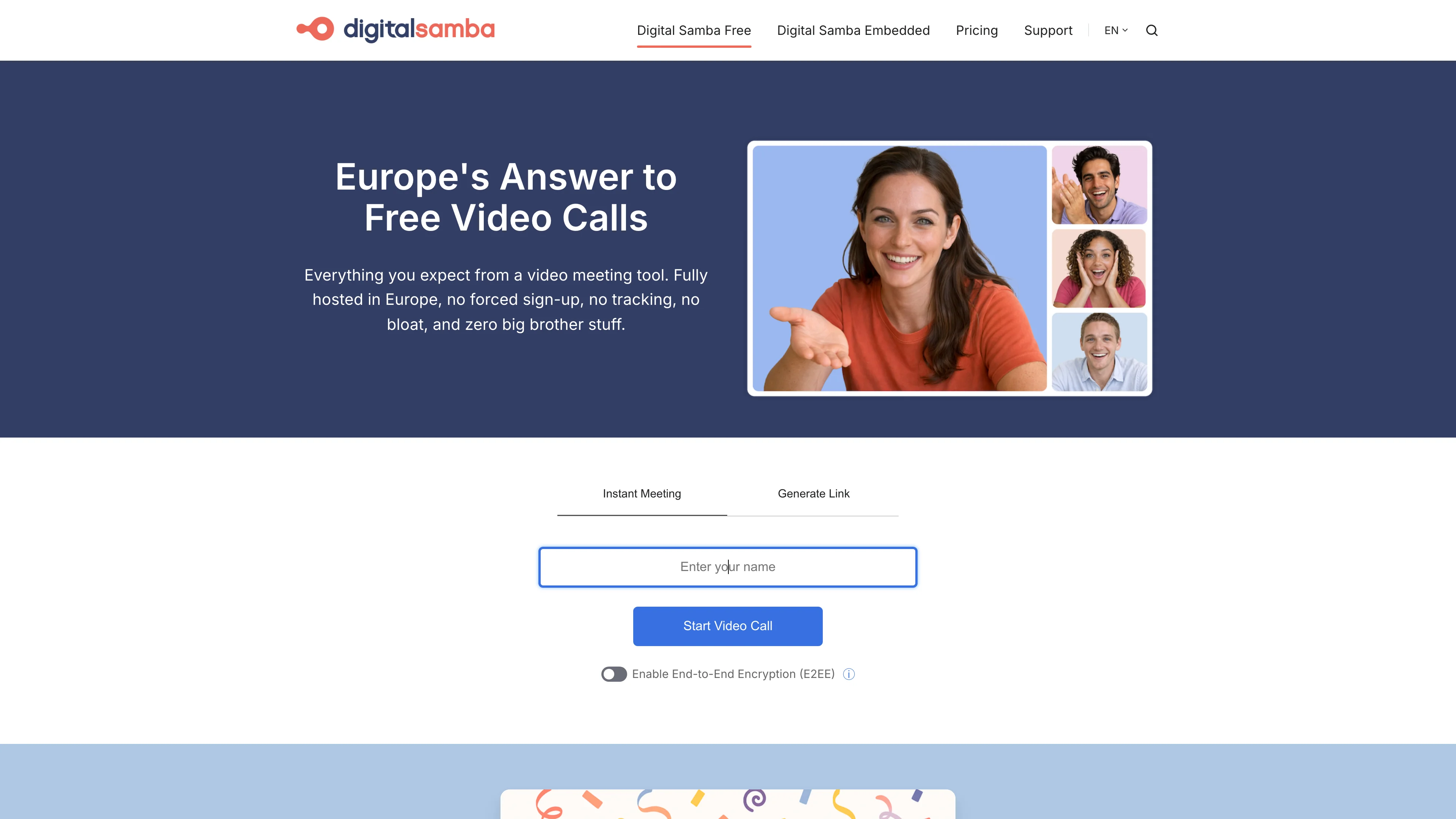
Digital Samba is a Barcelona-based video conferencing platform founded in 2003, making it one of Europe's longest-running video meeting services. The product line covers two distinct offerings: Digital Samba Free (a Zoom/Meet-style end-user product) and Digital Samba Embedded (a white-label SDK for developers building video into their own apps).
The platform runs entirely on European infrastructure with European sub-processors only, making it one of the strongest GDPR-native alternatives to Zoom, Microsoft Teams, and Google Meet for EU companies and public sector organisations.
Key features:
- Instant meeting links that stay active for 30 days with no account required
- End-to-end encryption (E2EE) option for sensitive meetings
- Screen sharing and collaborative tools
- Q&A, polling, shared notes, whiteboards built-in
- Digital Samba Embedded, a white-label video SDK and API for developers
- 100% European infrastructure with no US or non-EU sub-processors
- GDPR-compliant, SOC 1-aligned processes
- No tracking, no data profiling, and no monetisation of meetings
- SSL/TLS encryption in transit
- Free tier that stays completely free with no hidden costs
Headquartered in Barcelona (Travessera de Gràcia 98 bis 6-2, 08012). A strong Spanish alternative to Zoom and Teams for teams that need EU data residency without compromising on features, or a video API for developers building custom collaboration tools.
-
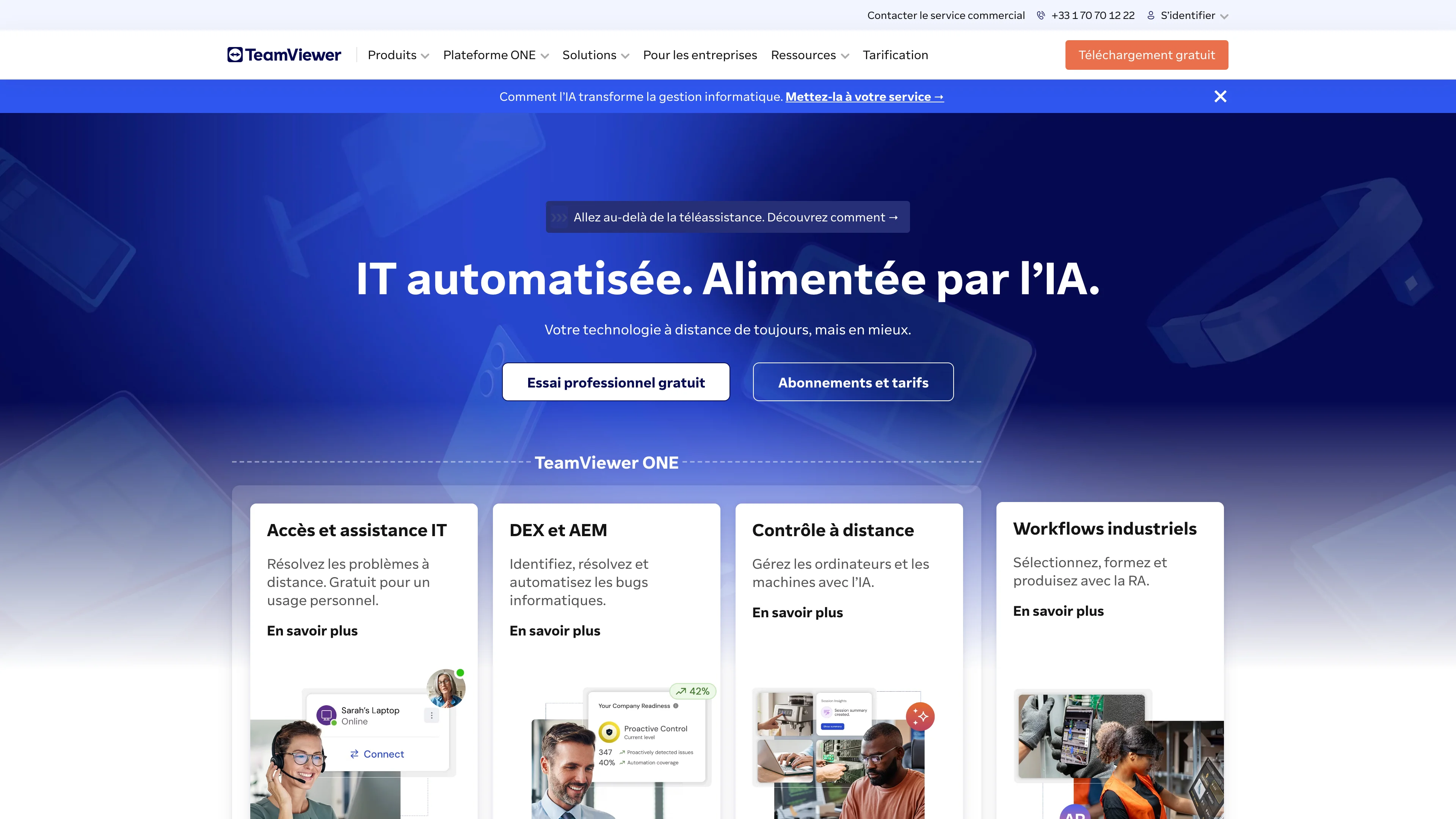
TeamViewer delivers AI-powered remote access, support, and endpoint management across 2.5 billion connected devices for IT teams, helpdesks, and industrial operators. A single agent enables cross-platform remote control, unattended access, automated remediation of recurring issues, and real-time endpoint visibility, with AR workflows extending the same connectivity onto the factory floor.
The product family spans TeamViewer Remote for SMBs, Tensor for enterprise, DEX for proactive digital-employee-experience monitoring, Frontline for industrial AR, and the unified TeamViewer ONE platform. Native integrations plug into Microsoft, ServiceNow, Slack, Teams, Salesforce, and Jira, so tickets, alerts, and remote sessions flow through existing IT workflows.
Key benefits:
- Remote access and control across Windows, macOS, Linux, iOS, and Android
- Unattended endpoint management patches and remediates at scale
- Digital Employee Experience monitors device health proactively
- AR workflows guide industrial operators through complex procedures
- ITSM integrations connect ServiceNow, Jira, Salesforce, and Teams
- Enterprise encryption secures every remote session end-to-end
Headquartered in Göppingen, Germany, TeamViewer is a DAX-listed European company operating under full GDPR compliance and carrying ISO/IEC 27001, SOC 2, SOC 3, and HIPAA/HITECH certifications, with a BitSight rating in the top 1% of the technology sector. Remote-session metadata is governed by European law rather than US disclosure regimes.
Named a 2025 Gartner Magic Quadrant Leader for DEX and trusted by customers including Carollo, teamtechnik, and Cimbali Group, with more than one million AI-assisted sessions delivered.
-
Secure video conferencing platform operated in German data centers with GDPR compliance. Features breakout rooms, interactive whiteboards, polls, and recording capabilities.
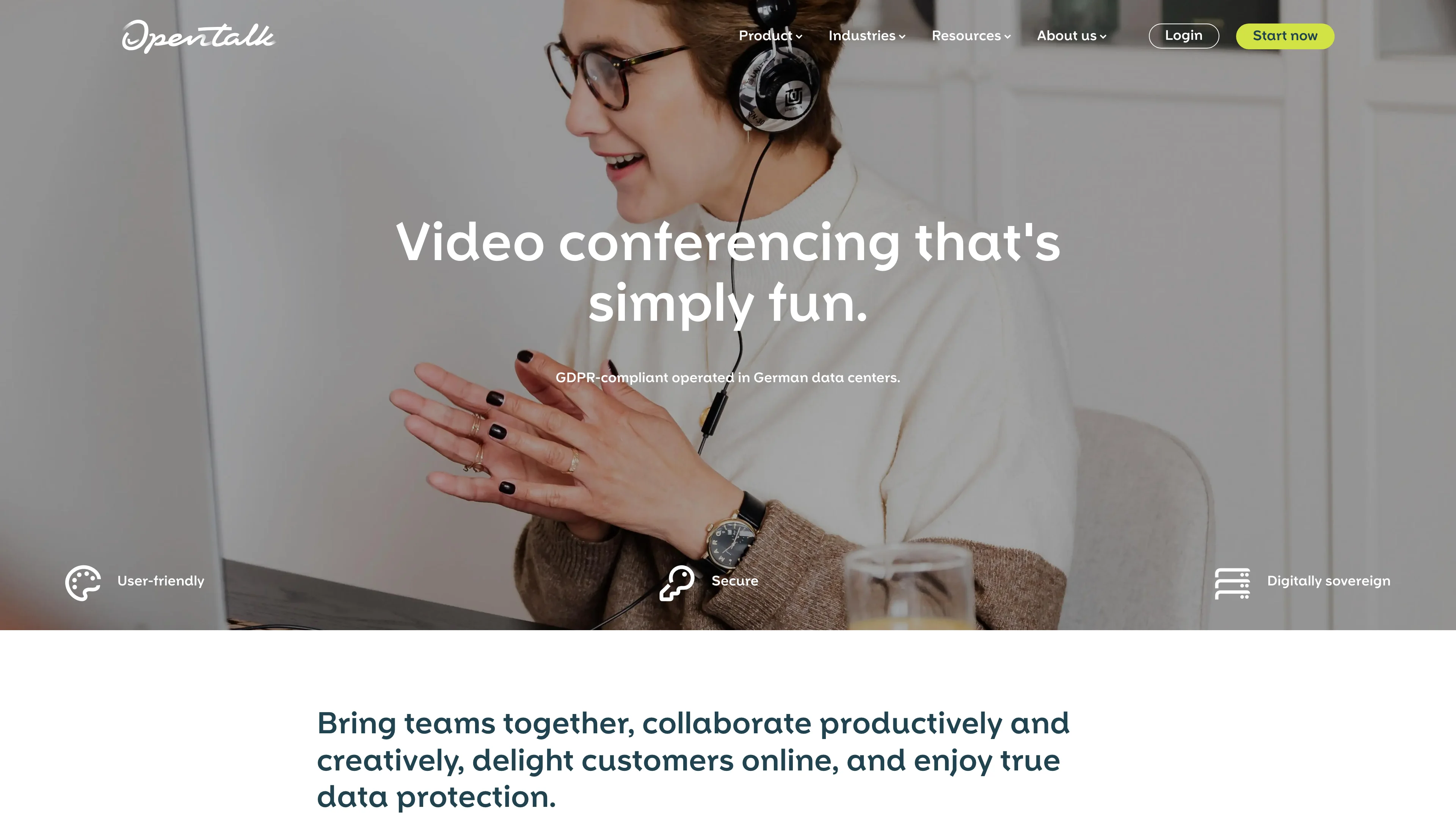
Video conferencing operated from German data centers with breakout rooms, interactive whiteboards, polls and recording, built for GDPR-compliant meetings.
-
Polish browser-based webinar and video conferencing platform with automated webinars, paid events, breakout rooms, recordings and HubSpot, Salesforce and Moodle integrations.
ClickMeeting is a Polish browser-based webinar and video conferencing platform for running live webinars, automated webinars, paid online events, online courses and virtual meetings entirely in the browser. Founded in Gdańsk in 2011, it serves 170,000+ customers across 160+ countries and is the largest webinar vendor headquartered in Central Europe.
The platform pairs live and on-demand webinar formats with a full event workflow: registration pages, automated email sequences, reminders, polls, Q&A, call-to-action buttons, recording and replays. A paid-webinars module lets organisers charge for access through PayPal and Stripe, and integrations with HubSpot, Salesforce, Moodle, Google Analytics and Zapier push attendee data back into the marketing stack.
Key benefits:
- Live, automated and on-demand webinars with no download required for attendees
- Registration pages, reminders and follow-up emails automated per event
- Breakout rooms and multi-presenter support for training and workshop formats
- Paid webinars with integrated PayPal and Stripe checkout
- Polls, Q&A, surveys and call-to-action buttons for interactive sessions
- Recording and replays stored in the cloud with shareable links
- Integrations with HubSpot, Salesforce, Moodle, Google Analytics and Zapier
ClickMeeting is headquartered in Gdańsk, Poland, and hosts all event and attendee data on EU-based infrastructure under GDPR and the Polish UODO. A full DPA, SCCs for sub-processors and ISO 27001-aligned operations are available to every paying customer.
Trusted by 170,000+ organisations across finance, education, healthcare and technology, ClickMeeting is the reference choice for European teams that want a browser-based webinar platform with strong monetisation features and sovereign EU data residency.
-
All-in-one platform for webinars, virtual meetings & events. Features easy setup, customization, CRM sync & secure EU hosting. Boost engagement effortlessly.
Livestorm is a French video engagement platform for running webinars, virtual events, product demos, online courses and all-hands meetings entirely in the browser. Founded in Paris in 2016, it powers video events for 10,000+ companies worldwide and has built its reputation on a zero-download, browser-first experience for organisers and attendees alike.
The platform pairs live and on-demand webinar modes with automated workflow features: registration landing pages, email sequences, reminders, polls, Q&A, handouts, upvoting, replays and analytics. Integrations with HubSpot, Salesforce, Marketo, Pardot, Pipedrive and Zapier push every registration and engagement metric back into the marketing stack.
Key benefits:
- Browser-based attendance with no downloads for organisers, speakers or attendees
- Registration pages, email sequences and reminders automated per event
- Live, on-demand and automated webinar modes for every content format
- Polls, Q&A, upvoting and handouts for interactive sessions
- Recording and replays with auto-published pages and analytics
- Integrations with HubSpot, Salesforce, Marketo, Pardot, Pipedrive and Zapier
- Team roles and workspaces for marketing, sales and customer-success teams
Livestorm is headquartered in Paris, France, and hosts all event, attendee and recording data on EU-based infrastructure under GDPR and French CNIL oversight. ISO 27001 certification, SOC 2, a full DPA and SCCs for any sub-processor transfer are standard on every plan.
Trusted by Shopify, Honda, Sodexo, Spendesk and thousands of marketing teams worldwide, Livestorm is the reference choice for organisations that need a browser-native webinar platform with strong automation, marketing integrations and sovereign EU data residency.