6 Best European WordPress Alternatives in 2026
The best European alternative to WordPress in 2026 is TYPO3, based in Germany. All 6 options below are European-owned, GDPR-native and ranked by feature parity and relevance.
By the EU Alternatives team Last updated
Our top pick this year is TYPO3, but every option on this list is European-owned, GDPR-native, and production-ready. Worth a closer look: Pagecord, Kirby, Spinal, Writizzy.
WordPress alternatives are mainly Content & Media. Browse that category for a wider shortlist beyond this list.
Top European WordPress alternatives compared
| # | Alternative | Country | Open source | Free tier | Compare |
|---|---|---|---|---|---|
| 1 | TYPO3 | Germany | Yes | Yes | vs WordPress → |
| 2 | Pagecord | United Kingdom | No | Yes | vs WordPress → |
| 3 | Kirby | Germany | No | No | vs WordPress → |
| 4 | Spinal | Netherlands | No | No | vs WordPress → |
| 5 | Writizzy | France | No | No | vs WordPress → |
-
Enterprise open source CMS with multisite and multilingual management, long-term support releases, a dedicated security team, and WCAG accessibility support.
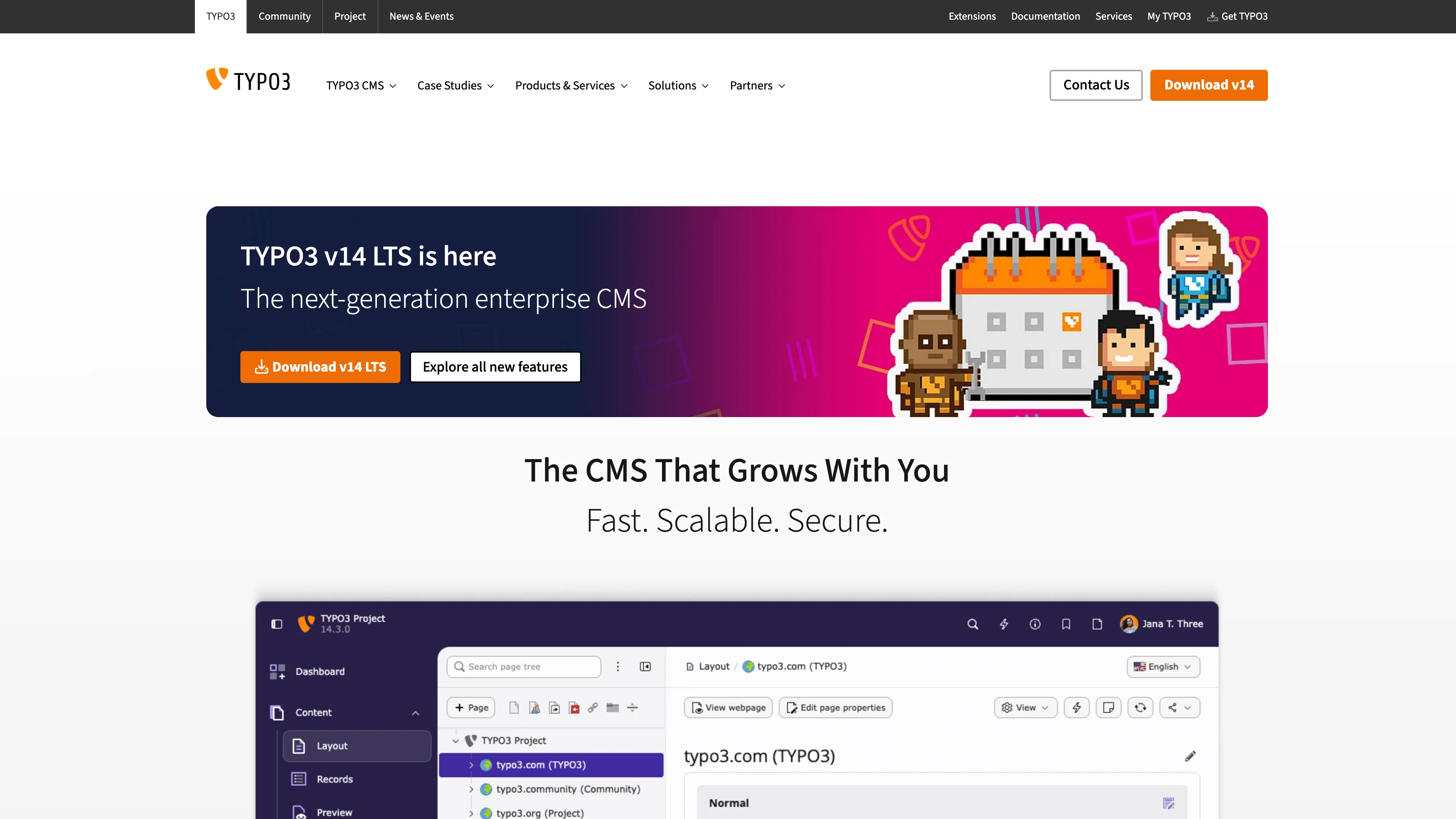
TYPO3 is a German enterprise open source CMS that has powered demanding websites since 1998, from UNESCO to German federal ministries. Where WordPress grew from blogging, TYPO3 was built for multisite and multilingual operations from the start: one installation can run tens or hundreds of sites in dozens of languages with shared content and centralized governance.
Releases follow a predictable long-term support cycle, a dedicated security team ships coordinated advisories, and WCAG 2.1 accessibility support helps public-sector teams meet legal requirements. The CMS is free under GPL, works headless or templated, and integrates with ERP and CRM systems, while TYPO3 GmbH sells SLAs and extended support for organizations that need contracts.
Key features:
- Multisite management running hundreds of sites from one installation
- Enterprise multilingual support with structured translation workflows
- LTS releases with predictable upgrade and support windows
- Dedicated security team with coordinated vulnerability handling
- WCAG 2.1 accessibility support for public-sector compliance
- Headless capable with APIs alongside classic templating
- Free under GPL with paid SLAs available from TYPO3 GmbH
TYPO3 is stewarded by the TYPO3 Association in Switzerland with commercial operations run by TYPO3 GmbH in Düsseldorf, Germany, and is recognized as a Digital Public Good. The ecosystem of European agencies around it is among the largest of any CMS.
Ideal for governments, universities, and enterprises that need WordPress-class flexibility with European governance and real accessibility compliance.
-
Publish posts and pages by email, editor or Obsidian, with themes, privacy-friendly analytics, a subscriber newsletter and custom domains on Premium.
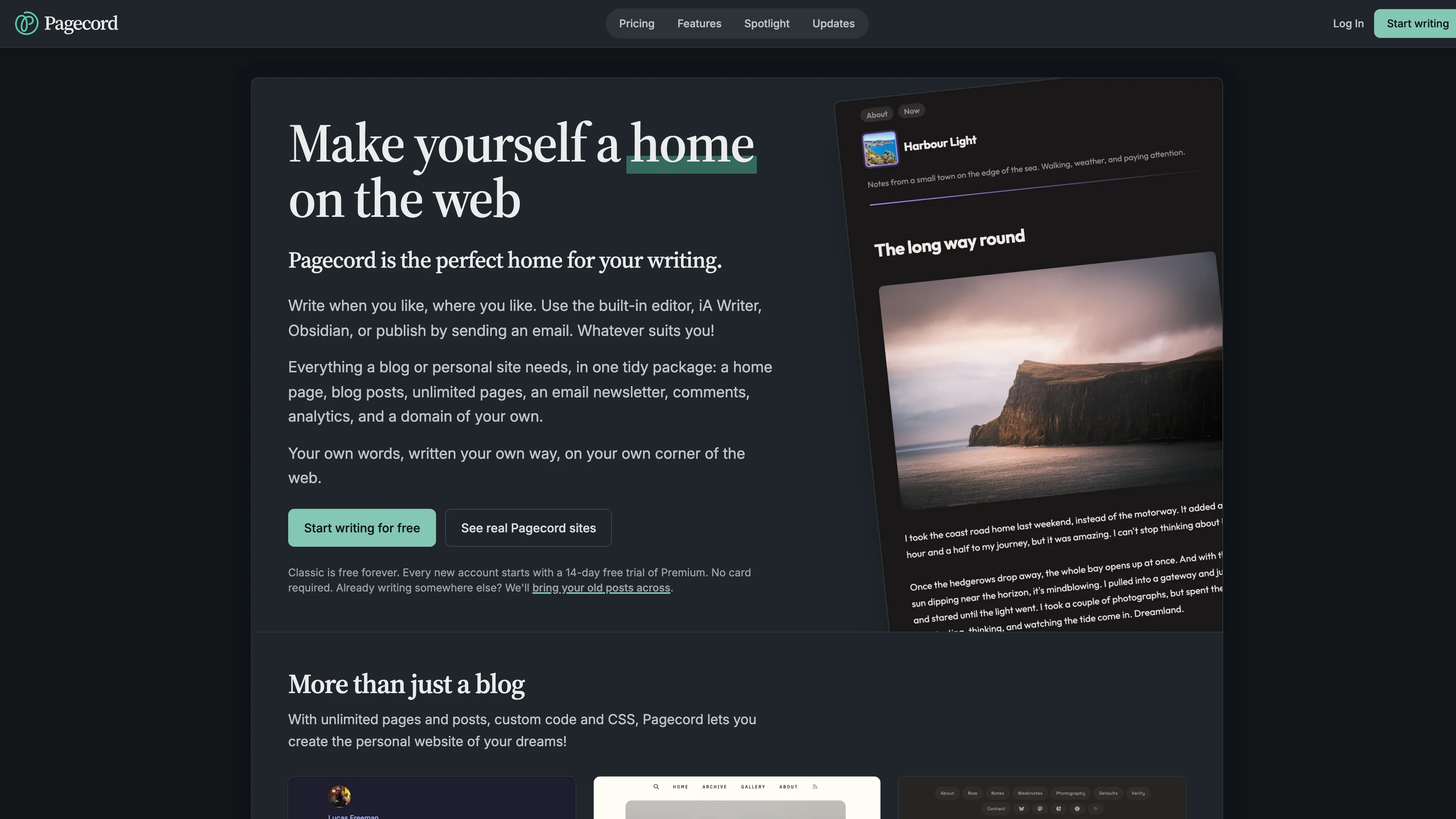
Pagecord is a minimalist blogging platform for people who want a home on the web without running a CMS. You get unlimited posts and pages, a custom home page, tags, search, comments, contact forms and RSS, and you can write in the built-in editor, publish by email, or send posts from Obsidian, iA Writer, the API or a command-line tool.
The free Classic plan keeps unlimited posts and pages and allows 20 image and audio uploads. Premium, at 4 dollars a month or 39 dollars a year with a 14-day trial, adds a custom domain, custom CSS, page view analytics and an email newsletter that sends readers each post or a weekly digest. Everything can be exported as HTML or Markdown at any time.
Key benefits:
- Free forever plan with unlimited posts and pages
- Publish by email or from Obsidian, iA Writer, the API and the CLI
- Themes, fonts and custom CSS for a site that looks like your own
- Email newsletter for up to 250 subscribers on Premium
- Privacy-focused analytics that can be switched off entirely
- Custom domain included with Premium
- Full export in HTML or Markdown, so your writing stays portable
Pagecord is run by Pagecord Ltd, a bootstrapped company registered in Edinburgh, Scotland, and led by its founder Olly Headey. Its privacy policy lists Hetzner servers and an Ubicloud managed database in Germany, with file storage on Cloudflare R2 in Western Europe. Some processors, including OpenAI for content moderation, may handle data outside the UK and EEA under standard contractual clauses.
The code is public on GitHub under the Pagecord Licence, which allows self-hosting but forbids offering it to others as a hosted service, so it is source-available rather than open source in the OSI sense.
-
File-based CMS with no database, a fully customizable admin panel, headless or templated output, and simple one-time licensing.
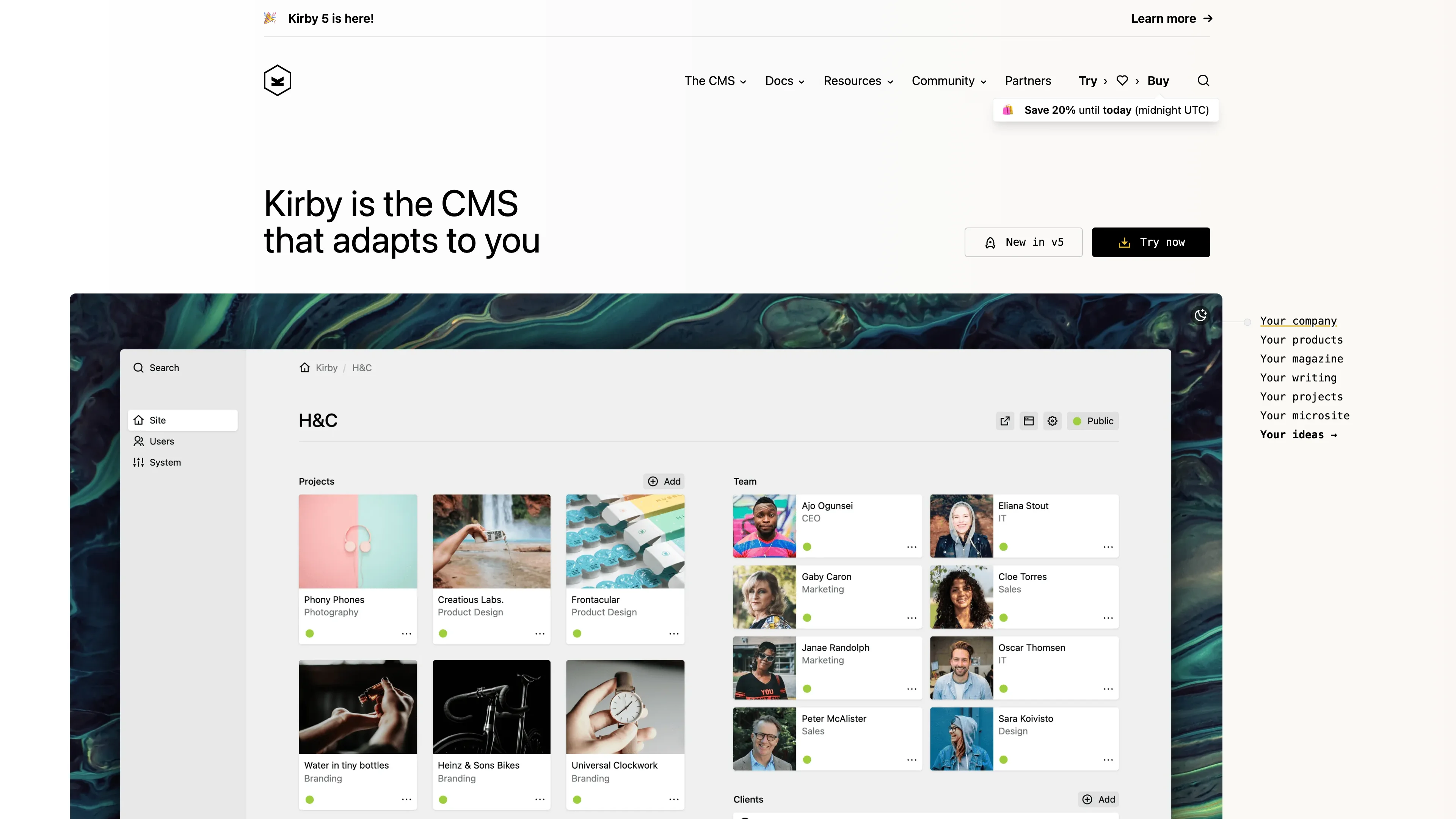
Kirby is a German file-based CMS that stores content in plain files and folders, with no database to install, back up, or break. Sites deploy by copying files, version cleanly in Git, and stay fast under load, which is why designers and developers have made it a quiet favorite since 2012.
The admin Panel is fully customizable through blueprints: editors see exactly the fields their content needs, nothing more. Kirby renders through classic PHP templating or runs headless via its API, and a rich plugin ecosystem extends both. Licensing is refreshingly simple: a one-time payment per site, three years of updates, no subscription.
Key features:
- No database, content lives in files and folders you can version in Git
- Customizable Panel with blueprints shaping the exact editing interface
- Headless or templated output from the same content
- One-time license of 99 euros per site, no subscription lock-in
- Unlimited free local installs for development and staging
- Plugin ecosystem with an official directory and stable APIs
- Free licenses for students, educators, and selected showcase projects
Kirby is developed by Content Folder GmbH & Co. KG near Heidelberg, Germany, and proudly carries its Made in Europe branding. As a self-hosted product your content never touches a third-party cloud, and the source is publicly auditable even though the license is commercial.
Ideal for design studios and developers replacing WordPress on client sites that need speed, clean content modeling, and zero database maintenance.
-
Git-based CMS for static site generators: minimal editor, scheduled publishing, editorial workflow board and per-person permissions, syncing straight to your GitHub repo.
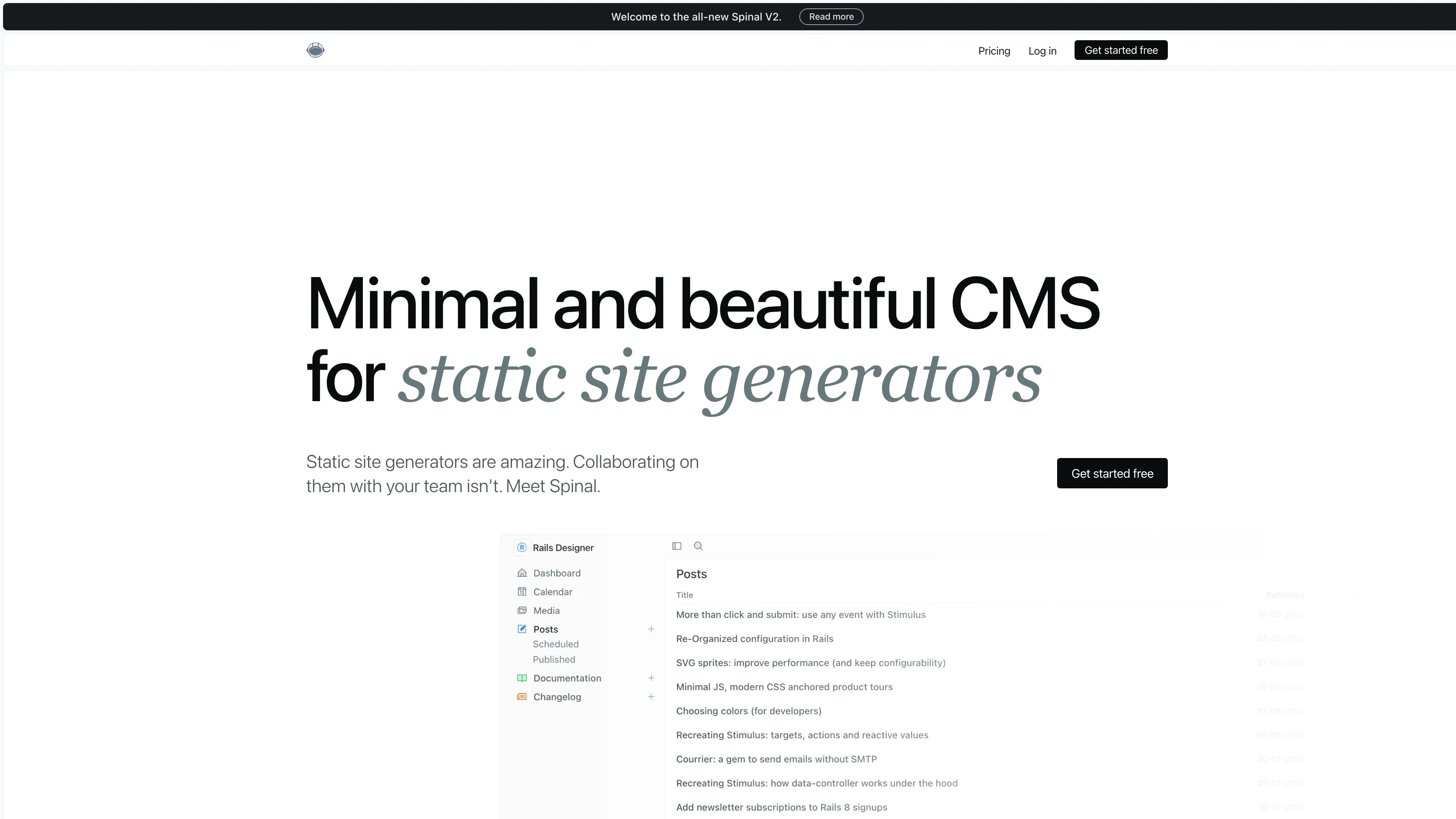
Spinal hands a static site's content back to the people who actually write it. Marketers, writers and editors work in a minimal, distraction-free editor, and everything they publish lands as an ordinary commit in your GitHub repo. Nobody on the content side has to learn branches or pull requests.
Spinal syncs with the repo behind Astro, Hugo, Jekyll, 11ty and ten other generators. Pressing Publish writes a commit to your main branch, which triggers the build you already run on Netlify or Vercel. Scheduled pieces commit themselves at the chosen time, so a launch goes out without anyone opening a terminal.
Key benefits:
- Nothing to install as the editor runs in the browser against an existing repo
- Workflow board carrying each piece from idea through draft and QA to published
- Calendar and scheduling so posts commit and go live at the time you picked
- Inline comments keeping feedback on the draft, not scattered across chat threads
- Granular permissions setting who may edit, who may publish and who invites teammates
- Edit locking stopping two people quietly overwriting the same article
- Command menu search finding any word across every content item at once
- Thirteen generators supported, from Astro and Hugo to VitePress, Middleman and Zola
Spinal is a bootstrapped four-person company headquartered in Amsterdam, and states that its products are operated in the Netherlands. The structural argument matters more than the hosting one: your content never really lives in Spinal. Articles stay as files in your own git repository, so the site, its history and every draft survive intact the day you stop paying.
One Pro plan at $39 a month covers five team members, with a seven day trial rather than a free tier. It suits small SaaS and agency marketing teams on a Jamstack site.
-
Minimalist blogging platform with built-in newsletter, privacy-friendly analytics, and beautiful themes. Import from WordPress, Ghost, or Substack easily.
Writizzy combines a hosted blog and newsletter for writers who want to publish without maintaining a collection of plugins. Articles can appear on the web and reach subscribers by e-mail from the same platform. Themes, comments and analytics sit alongside the editor, making it a plausible home for an independent publication rather than just another mailing tool.
The import tools accept content from WordPress, Ghost, Substack, Medium and Beehiiv, with subscriber migration where the original platform supplies an export. A custom domain is available on paid plans. Publishing stays within a managed service: that reduces administration, but writers still need to check plan limits and migration details before moving an established audience.
Key benefits:
- Combined publishing sends blog posts to subscribers without a separate newsletter service.
- Content imports bring existing articles across from several established publishing platforms.
- Customisable themes give a publication its own appearance without plugin maintenance.
- Reader subscriptions support paid writing without a platform commission on revenue.
- Built-in analytics help writers follow readership from their publication's own dashboard.
- Export support provides a route for taking content elsewhere when needed.
Writizzy is operated by Hugo Lassiège's registered business in Champagne-au-Mont-d'Or, France. Its legal notice identifies Hetzner as the application host and Slovenia's BunnyWay as the media CDN provider. Those European suppliers describe the service's infrastructure arrangements; they should not be mistaken for a guarantee that every delivery endpoint is in France.
The free plan includes one blog, 100 MB of media storage and a newsletter for 100 subscribers. Starter is advertised at €9 per month and adds a custom domain and search-engine availability. That last restriction matters for a writer whose growth depends on search traffic.
-
Simple headless blogging CMS with Notion-style editor, hosted media uploads, and type-safe API client. Get running in minutes with zero configuration.
Spanish headless blogging CMS with a Notion-style editor, hosted media uploads, and a type-safe API client, ready to run in minutes.


