4 Best European ElevenLabs Alternatives in 2026
The best European alternative to ElevenLabs in 2026 is ReadSpeaker, based in the Netherlands. All 4 options below are European-owned, GDPR-native and ranked by feature parity and relevance.
By the EU Alternatives team Last updated
Our top pick this year is ReadSpeaker, but every option on this list is European-owned, GDPR-native, and production-ready. Worth a closer look: CereProc, Acapela Group, Speechmatics.
ElevenLabs alternatives are mainly AI & Machine Learning. Browse that category for a wider shortlist beyond this list.
Top European ElevenLabs alternatives compared
| # | Alternative | Country | Open source | Free tier | Compare |
|---|---|---|---|---|---|
| 1 | ReadSpeaker | Netherlands | No | Yes | vs ElevenLabs → |
| 2 | CereProc | United Kingdom | No | Yes | vs ElevenLabs → |
| 3 | Acapela Group | Belgium | No | Yes | vs ElevenLabs → |
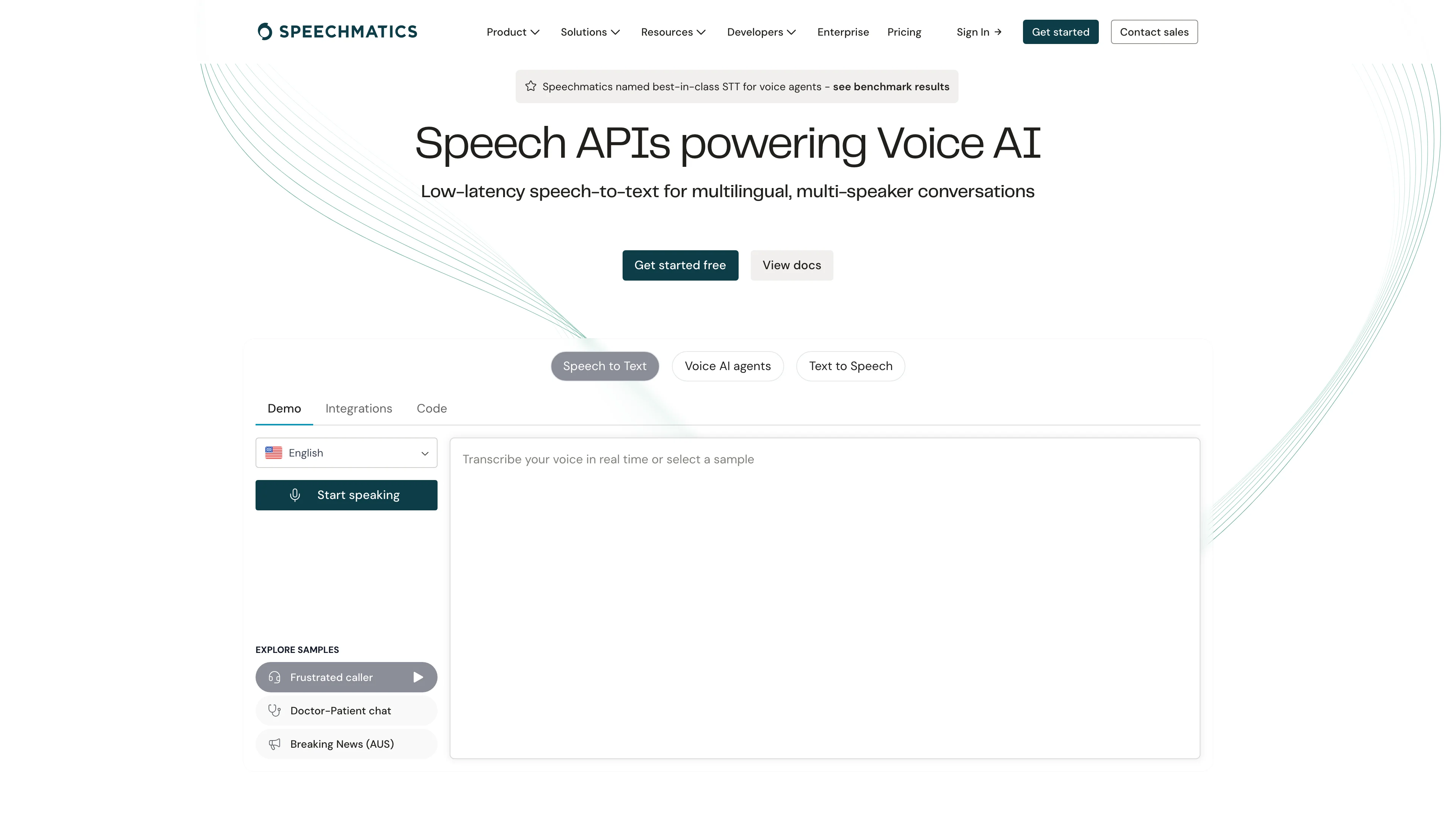
| 4 | Speechmatics | United Kingdom | No | No | — |
-
Dutch TTS platform for education, publishing, and enterprise: 110+ voices across 50+ languages with GDPR-compliant EU processing and custom neural voice creation.
ReadSpeaker delivers enterprise-grade text-to-speech that turns written content into natural-sounding audio across websites, apps, documents, and learning platforms, covering 280+ AI voices in 80+ languages with neural-quality synthesis. Serving 12,000+ organisations including Vivendi, LVMH, Adobe, and Spotify, it powers accessibility, learning, and voice-enabled experiences with studio-grade voice quality and predictable licensing.
The product range spans webReader for live site voicing, docReader for PDFs, TextAid for literacy support, speechMaker Studio for audio production, and the speechCloud API and speechEngine SDK for embedding TTS into any application. Cloud and on-premise deployment options let teams meet strict data residency, latency, and security requirements without compromise.
Key benefits:
- 280+ neural voices across 80+ languages for global deployments
- WCAG 2.2 AA compliance meeting EU and US accessibility mandates
- speechCloud API for fast integration into web, mobile, and IoT apps
- On-premise SDK for air-gapped and low-latency environments
- Voice cloning and custom voices for brand-consistent audio experiences
- LMS integrations supporting Canvas, Moodle, Blackboard, and D2L
ReadSpeaker is headquartered in Driebergen-Rijsenburg, Utrecht, in the Netherlands, founded in 1999 and now part of Hoya Corporation. The company is ISO/IEC 27001:2022 certified, fully GDPR compliant, and provides VPAT documentation for procurement. European hosting options keep voice processing under EU jurisdiction, making ReadSpeaker a trusted choice for public sector, education, and regulated industries across the continent.
-
Scottish speech synthesis with distinctively characterful voices in 25+ languages: cloud API plus on-device SDKs for healthcare, accessibility, and media.
CereProc develops text-to-speech technology that produces natural, characterful synthetic voices for accessibility, media, and enterprise applications. The portfolio includes neural TTS engines and a catalogue of character voices across dozens of languages and accents. The company is known for preserving regional identity in speech synthesis, from Scottish and Irish English to bespoke voice cloning for individuals who have lost the ability to speak.
The platform ships as SDKs, cloud APIs, and on-premise servers, with MRCP and gRPC interfaces for IVR and contact-centre integration. Custom voice builds let organisations commission branded voices from as little as a few hours of recorded audio, and deployments run on Windows, Linux, Android, and iOS.
Key benefits:
- Neural voice synthesis delivering natural prosody and emotional expression
- Custom voice creation from client recordings for branded or personal voices
- Multi-language catalogue covering major European and global languages
- Flexible deployment via cloud API, on-premise server, or embedded SDK
- Accessibility focus with voice banking for motor neurone disease patients
- Telephony integration through standard MRCP and gRPC protocols
CereProc is headquartered in Edinburgh, United Kingdom, founded in 2005 as a University of Edinburgh spin-out. While based in the UK rather than the EU, it operates under UK GDPR, offers EU-hosted and on-premise deployments, and is a trusted speech vendor for European accessibility and broadcast clients.
-
Belgian TTS platform with 100+ AI voices in 35+ languages: SSML, neural voice cloning, and on-premises deployment for automotive, accessibility, and enterprise use cases.
Acapela Group builds AI-powered text-to-speech and personalized voice synthesis used in accessibility, transport, gaming, and assistive communication devices. Its voices speak naturally across more than 30 languages and can be customized with brand identities, vocal smileys, and individualized voices banked by real people before voice loss.
The platform ships as cloud APIs and embedded SDKs for Windows, macOS, Linux, iOS, Android, UWP, and low-resource hardware, so the same voice can run on a phone, a kiosk, a robot, or a car infotainment system. Teams can build custom voices, preserve an end-user's own voice, or pick from a large catalogue of ready-made speakers.
Key benefits:
- 30+ languages broad multilingual coverage with natural prosody
- My-Own-Voice bank and reuse a person's own voice for AAC devices
- Embedded SDKs run voices offline on desktop, mobile, and embedded chips
- Custom voice branding create a unique voice identity for products
- Vocal smileys expressive laughs, yawns, and emotional cues
Headquartered in Mons, Belgium, Acapela Group operates under EU jurisdiction and GDPR, with voice data handled inside Europe. Its technology powers public transit announcements for BVG Berlin and Transport for London, banking voices at Crédit Agricole and Caisse d'Épargne, and assistive speech products from Tobii Dynavox, PRC-Saltillo, and Voice Dream Reader.
For European organizations that need a trustworthy TTS partner without depending on US cloud voice APIs, Acapela offers decades of speech expertise and an EU-based operator.